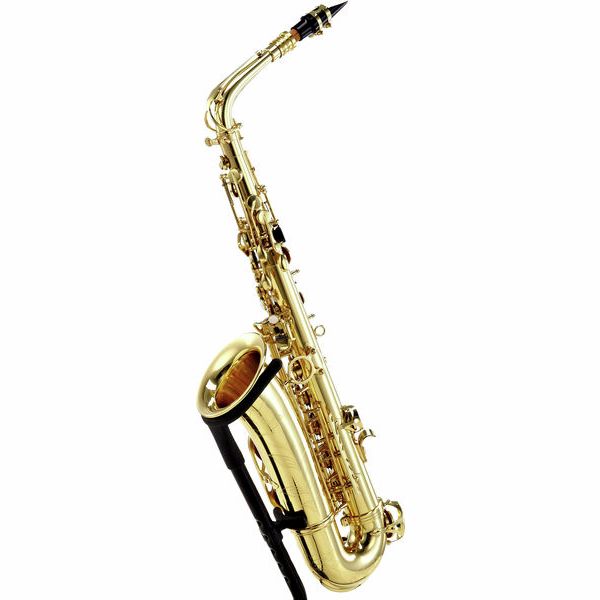
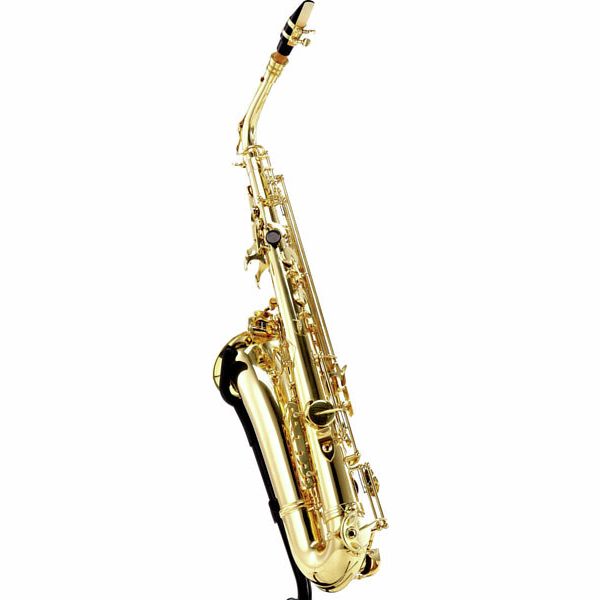
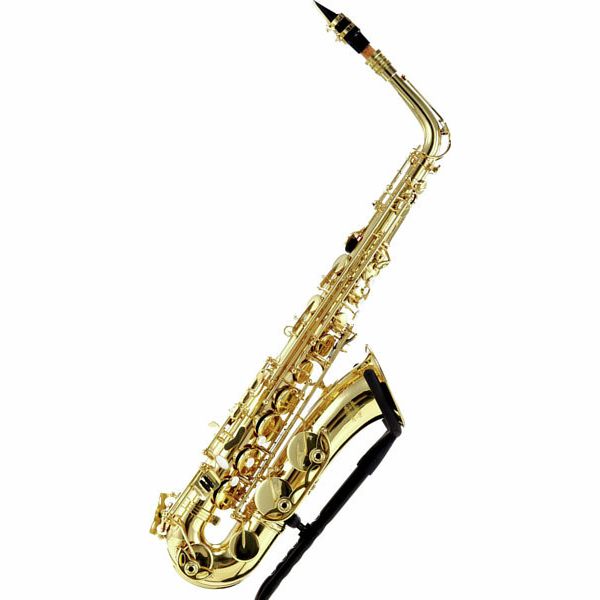
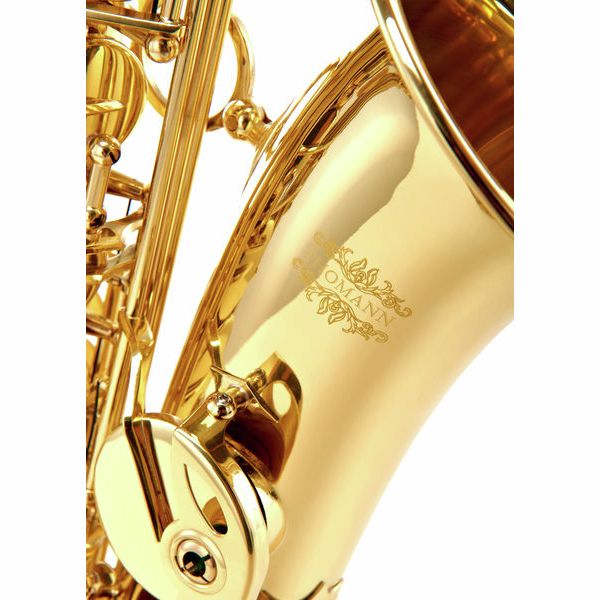
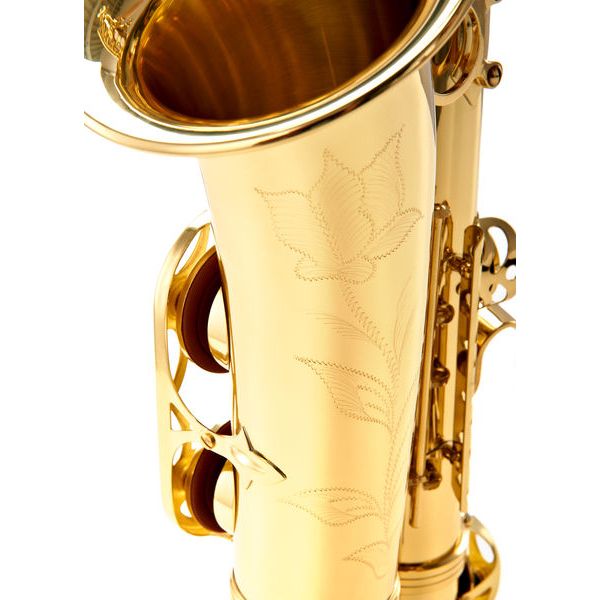
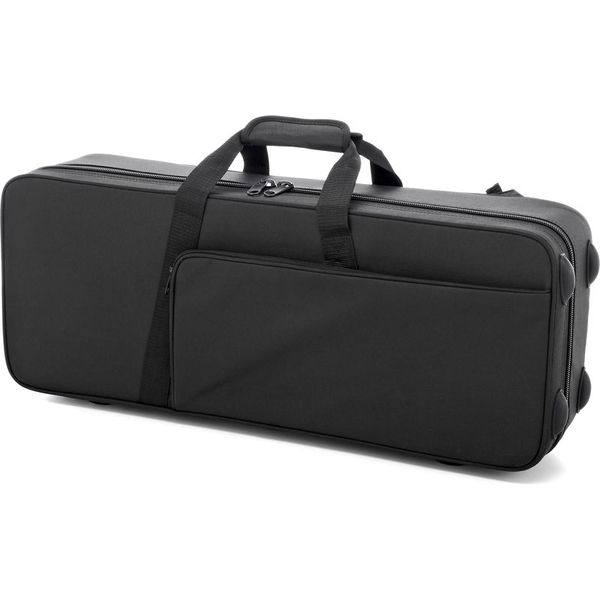
This is pretty much the only new C-Melody you can get anywhere at the moment. It's undeniably good value for the money, but some quirky design decisions leave me wishing that a higher quality premium model existed.
First, the good: It is in fact a C-mel and so can play, without transposing, from choral, piano, or string scores. And its warmer, more balanced tone blends well with choir and classical. The only other way to get a C-mel in 2026 is to find and restore something from the 1920s. They're special and they stand out. Unlike 1920s saxes, this one has standard modern fingering and ergonomics.
It uses alto mouthpieces. The one included with mine had a rather restrictive chamber and I got a much better response from the instrument with more open designs (a Yamaha 4C worked pretty well). Tenor mouthpieces do not fit.
Its tone is clean and even, with no significant break at the octave. It's a nice sounding instrument that's easy to control. Not a stage horn, but very well suited to more intimate environments and casual jamming.
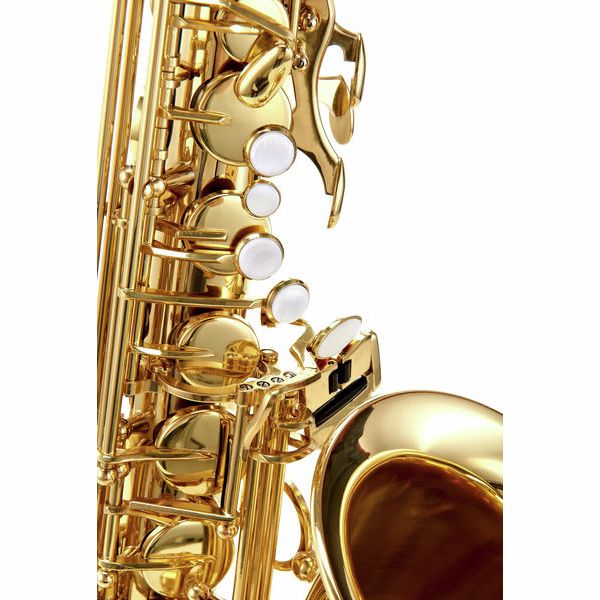
It does have some downsides. First is that the right forefinger 3-key set is oddly placed, 15 mm higher than any other sax I've seen, so you have to remember to really stretch for C and E (this one's Bb is in the usual C position and they go up from there.) The high F#, while nice, is tricky to use without a squeak. That's manageable.
Less manageable is that its temperament is not quite 12-TET but varies by up to 8-10 cents in ways that I can't quite understand the logic of. Remembering exactly how to compensate that with embouchure pressure is taking some time.
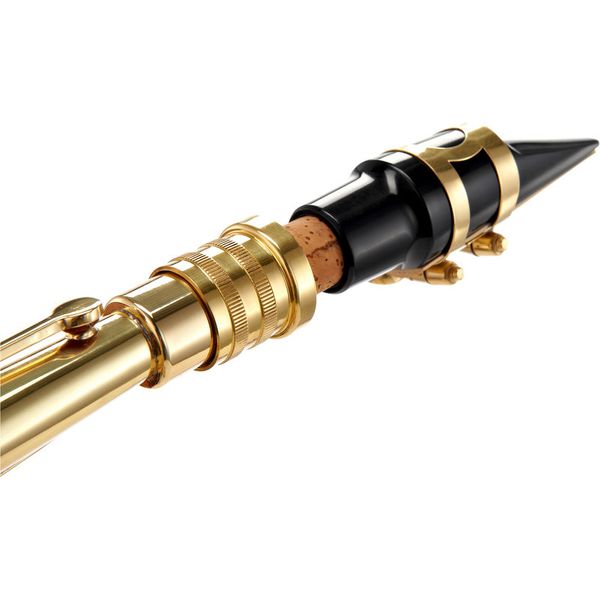
The microtuner seems like a nice touch in principle, but the thread machining on mine is sloppy; it's a less stable joint than I would have hoped and can shift by a couple of millimetres without turning the ring. Best to keep it pushed in to the movable stop as you turn the threads to avoid the 2 mm backlash. Similarly, there's some corner-cutting to save machining cost in parts of the linkage mechanisms, where another $100 of parts & labour to machine more precise pins & bushings would have yielded very noticeable improvements in quality.
Overall, I love the thing and it's probably the favourite horn in my collection. But I do wish I'd been able to buy a similar one with a sturdier microtuner, rolled tone holes positioned more carefully for a more precise temperament, and a little more care given to ergonomics and mechanism quality – things for which I would gladly have paid a 50% higher price. Perhaps some future product line manager will take note.